Writing About Otherness

Let’s celebrate our differences!

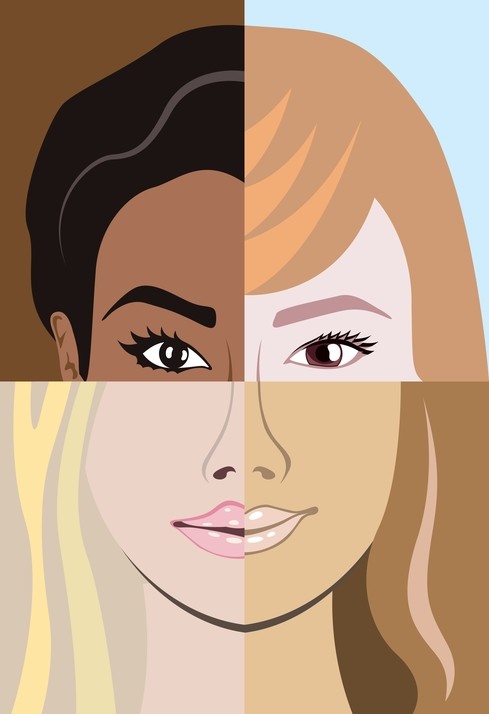
Image showing a morph of women of different races.

One of the most disturbing things I’ve ever heard a publisher say, at a conference several years ago, was, “We don’t let our black authors write white main characters; we don’t think they can identify enough to write it credibly.”

Say what?

I sat there, breathing through my mouth in shock, as she went on to explain that writers who write about people who weren’t like them, as in a different race, culture, sex, etc., fall too often into stereotype and caricature. So they simply didn’t allow it. If you’re black, so were your main characters. If you were white, well, you get the picture.

Stereotypes from hell

I was stunned, and 20 years later, I’m still in shock. Sure, we’ve all seen writers and even film directors attempt to convey a character who’s out of their own personal paradigm and fall into the trap of exaggeration, to the point of being insulting. One of my all-time favourite writers is Ed McBain, the author of the wonderful 87th Precinct detective series, which I consume voraciously. But I have to admit that his portrayal of black people, especially in his earlier, less politically correct novels, were cringe-worthy. Lots of “dis” and “dat” and pimp-walking going on. 

The Internet is also rife with examples of men writing female leads and spending inordinate amounts of time on full, ripe bosoms and long, silky legs. Lots of breasts jouncing hypnotically, and even a woman who kept her driver’s license, credit card and money in a tiny purse tucked inside her hoo-ha (really). If you don’t believe me, click here for a cackle-inducing roundup of startled breasts and flanks that look like the fuselage of a war plane.

Okay, fine. Sometimes the differences between us can be hard to bridge, especially if we don’t take the time and energy to learn about other people. So does that mean we’re forever sentenced to write only about people who look, talk and act like we do? That’s boring!

But how do you write about people who are different and make them compelling and believable?

Empathy

Empathy makes all the difference. It is the very human ability to identify with the emotions and situations of others. It’s the ability to recognise when someone is happy, scared, upset or anxious, even when we aren’t feeling those emotions ourselves. And it applies even if that person is a figment of your own or someone else’s imagination.

For me the key has been to draw parallels between my character’s situation and something in my life that could elicit similar emotions. I may never have been abused by a partner, but I can think of times in my life when I’ve felt scared and betrayed. I’m not currently in possession of a penis, but if I were writing a sex scene from a male POV I’d focus more on the sensation of touch, scent, taste, rather than the mechanics of erection and ejaculation (lest I make myself a laughingstock).

Recognise your humanity

Realise that the differences that separate us are smaller than the commonalities that bind us. We’re all humans; we’ve all been hurt, we’ve all been happy and scared and angry. The situation your character finds himself in doesn’t have to be something you’ve experienced for yourself; it simply has to elicit similar emotions. That’s a great place to move on from.

As always, show, don’t tell

There’s the temptation to narrate the experiences of a character who’s markedly different from us, mainly because we’re afraid we won’t be able to accurately portray them, but you need to get over that. Immerse yourself into the experience until you feel . . . something. Then write about that something.

Surrender to the feeling

Let the emotions sweep through you. Feel the prickle of anxiety, the thrill of desire, the cold, clammy weight of dread. What you feel is probably what your character feels. Make use of it. Write it down!


Fiction is a uniting medium. It brings us together across borders and across centuries. Even across galaxies. This is because despite race, gender, nationality, religion, skin tone or whatever the hell else, we are all human. Space aliens, monsters and the undead can experience emotions similar to ours, and that’s what makes them believable. Take advantage of that, and your writing is going to be golden.

(And if you want to have a little fun, click here for a challenge: Can you write a description of a female character the way a man would? Post below, let’s see!)

Comments and questions, guys. Let’s talk it through!
Inspiration is Perspiration

As opposed to sitting on your hands and moaning that you’re out of ideas.

As a young writer, I used to think of my mind as some sort of divinely inspired mega-computer that was constantly online, plugged into the cosmos, being bombarded by story ideas, quotes and characters like the International Space Station is bombarded by space debris. I remember boasting gleefully to my agent, Deidre Knight of The Knight Agency, that I’d spent the weekend “downloading stories from my brain.” Talk about self-delusion.

As I spent more time writing (and as I grew the hell up), I realised that there’s no cosmic idea-generating alternative universe that has nothing better to do than throw ideas at me like litterbugs tossing beer bottles onto the highway. I discovered that finding ideas was hard—and finding good, fresh, useable ones was damn near impossible.

Y’all know what I mean. We’ve all been there, bashing our head against our keyboard like Don Music at his piano. “I’ll never get it! Never!”

But unless we want our store of ideas to dry up like a frog pond in April, we have to actively seek them out. Here are a few of the places I look for mine—and you can do the same.

Newspaper clippings

Over the years I’ve collected enough newspaper clippings to line a hundred hamster cages. I’m always snipping or tearing out articles that strike my fancy, be they about gruesome murders, weird fetishes, charming towns, or inspiring people. Maybe I’ll never use 90% of them . . . but think of all the things I can do with that last 10%!

Keep your eyes and ears open

Let’s not call it eavesdropping. Let’s call it “Casual attentive overhearing.” People say the damnedest things. Gossip. Scandal. Pathos. Wisdom. Hilarity. It’s all there, falling from the lips of friends and strangers like manna from heaven. And all ya gotta do is gather them up into your basket.

Did you know my novel, Love Me All The Way, was based on a single overheard sentence? I once heard a friend remark that her mother always said, “Never let a man give you pearls; he will one day make you cry.” I was so excited by the idea that I immediately tried to find out how I could turn it into a story. Who would give who pearls? And why would he make her cry?

Thump your Bible

Or any other work of scripture or mythology.  The Bible is my favourite source of story ideas, and many of my novels have noticeable threads that trace back to well-loved stories. And why not? The book covers thousands of years of human history and is crammed full of every human foible and flaw: vanity, lust, murder, rape, incest, infidelity, lies, scheming, angels, demons, birth, death, hope and redemption. And that’s just the first couple of pages!

Visit your inner landscape

That’s just a fancy way of saying “daydream”. If you have a day job, develop the skill of working through your story while looking offally, offally interested in the staff-meeting purgatory you’re stuck in. Take discreet notes in the margins of your notepad. Learn to get up and slide into your fantasy while leaving your body behind, looking poised and attentive at the boardroom table.

Read, read, read

If I told you how many people have told me they want to be writers but hate to read, your earlobe hairs would all fall out from shock. Repeat after me: it is impossible to be a writer if you are not a reader. And no, I will not be taking counter-arguments at this time. 

Explore your dreams

No, not the one with you, Forrest Gump, a motel room and a banana. Most of the time, dreams are your subconscious taking the piss out of you, but sometimes, the sneaky little diva throws a few gems your way. When it happens, for God’s sake write it down. Dream-ideas last for less time than morning dew on a warm car engine.

Doodle, you doodlebug

Sketches, drawings, charts and vision boards help you see what’s in your head. Once you see it, you can make it grow. And you don’t need to be the next great insert-hot-famous-artist’s-name-here to sketch out your ideas. You’re drawing for you and nobody else. Someone else thinks your WWII rapid-fire artillery canon-whatsit looks like a duck? Their problem, not yours.

Whatever you do, write your ideas down, no matter how dumb they sound at the time. Maybe the next time you look at them they’ll still look dumb.

But then again, maybe they won’t.


I’ve done my part. Now it’s your turn. Leave a comment below.

How not to be a crappy critique partner

Follow the golden rule.

As I said in a recent post, getting a bad review sucks. It can be inaccurate (or not), hurtful, or useless. Although it’s a bit more private, getting a bad critique from a friend or critique partner can suck just as bad. And if you can’t handle it, don’t dish it out.

Here’s how to avoid giving another writer a bad critique:

Ask yourself what you’d want if you were in their position.

Respect, right? Honesty, clarity and depth. That’s a good place to start.

Ask them what they’re looking for

Is there anything they’re particularly concerned about? Do they think they’ve nailed the setting but are still unsure of their characters? Are they anxious about inaccurately portraying a character of a different ethnicity, sexual orientation, or political point of view? Try to home in on what they’re most unsure about, and focus your feedback on that.

Be honest but not brutal

If a writer trusts your opinion, you owe them to be honest. Handing it back with a pasted-on smile and the assurance that it was “perfect” is doing them a disservice. Use tact where necessary, directness where necessary.  But make sure your feedback is motivated by a desire to help, not hurt. You wouldn’t want anyone to trash your piece, and tear it to so many shreds that you don’t recognise it anymore. So try to rein in your inner bitch.

Be specific

Saying, “I dunno, but I just didn’t like Theodore,” helps nobody. Why didn’t you like him? How can you fix him? Try to focus on specifics. “Theodore’s character didn’t feel realistic to me because he’s so consistently good that he almost doesn’t seem human.” Or, “Theodore’s mode of speech just doesn’t sound right. It’s not feasible to me that a man who never finished primary school would have the kind of vocabulary you’re putting in his mouth.” There, now that you’ve explained your concerns, your friend can fix the problem.

Be timely

Yeah, we’re all busy, but if someone gives you their precious book and asks you to read it, don’t toss it onto a drawer and convince yourself you’ll get to it “some time”. We writers are an anxious bunch. If you make us wait too long for feedback, we’ll start by consuming our fingernails, then move on to our toenails. Then our digestive juices will begin to dissolve our stomach lining. And all the while a nasty voice in our head will be chanting: They hate it because its awful. I suck. My book is a disaster. I’m never going to write again.

Please, put us out of our misery. Get back to us as soon as you’re able. Gracias.

Offer suggestions

If you’re a reader or a writer yourself, you’ll understand how valuable another person’s perspective can be. Sometimes we know something’s wrong, but aren’t sure how to fix it. If Theodore is too good to be true, how do we take him down a peg or two . . . convincingly? Does he filch pennies from the tip jar at the deli? Does he mumble an excuse and shut the door in the face of a couple of kids asking for school donations? Sometimes our imagination well runs dry, and we’re glad for a jump-start.

Remember, though, that just because you shared an idea doesn’t mean you own it. Give of your own free will, but for Gollum’s sake, don’t decide you have the right to call your writer friend up every three days to ask if they’ve used your idea yet. Maybe they will, maybe they won’t, but once a suggestion has been made, you no longer have ownership.

So what does this all boil down to? When you’re critiquing a piece, do as you would be done by. Because next time, it might be you looking for an opinion, and you’ll want only positive karma flowing your way.

Wait! You aren’t going without leaving a comment, are you?

It’s Scribble Pad Saturday!

Never heard of it? That’s okay; I just made it up.

Oh yeah! It's free!

It’s a lovely day and I’m in a good mood. I’m giving away FREE professional edits to the first FIVE writers sending in their material. No obligations, no strings attached, just some clear, compassionate advice on that piece you worked so hard on.

Simply:

  • Leave a comment on ANY of my Scribble Pad posts. (Not this one, duh.)
  • SHARE any of my posts to your social media.
  • Send me UP TO 2,000 WORDS of your novel, screenplay, non-fiction book or short story.

Cool? Cool.  

Offer ends midnight Sunday.

So you got a bad review . . .

Whatevs…

Five emoticons showing a range of angry to happy faces

Bad reviews suck. Big time. But if you’re going to be a writer—or a singer or an actor or a knife-juggler—you’re probably going to get them. Name me one Pulitzer Prize winner or Nobel Laureate who never got a thrashing in the press. You need to understand that once you’re in the public eye, you’re opening yourself up to analysis, critique and commentary.

Not all of it’s gonna be good.

It’s wonderful to have your ego massaged by squeals of You’re the best! And When’s your next book? But what do you do when the comments get ugly?

Ask yourself whether it’s justified

I’ve had—ahem—a few negative reviews in my time. My instinct was to cry buckets of tears. They hate me! Waaahhhh! Then I began to ponder. Was any of it justified?

Some oui, some non. Some people said that one of my books (Mesmerized, if you really wanna know) focused too much on the side story and not enough on the romance, which should always be central and shine out above all. “Where was the love?” one reviewer asked. Was she right? I’ll admit it: Yes, she was.

One of my novels featured a hero who got a concussion from a bomb blast, and yet still managed to bounce out of bed in a few days, running around and boinking my heroine. “He should be cloned,” one reviewer said nastily. Kinda mean . . . but she had a point.

I remember the ones that were right, and took those lessons to heart. They made me a better writer.

What if they’re wrong?

I’ve also had reviews that were way off the mark. One person presented a bizarre theory that my characters’ names echoed their personalities almost verbatim: Mattie because she was a doormat and Dominic because he was demonic.

Uh . . . no. That’s the stupidest thing I ever heard.

One book club wrote me to tell me they were blacklisting me because my book didn’t have enough sex in it. Huh? How much sex is enough? The sex fits in the plot line, the characters, and the situation, and that’s all the sex you need.

When reviews are off the mark, spiteful, or dead wrong, forget ‘em. Chalk them up to misguidedness, jealousy, or a mean spirit. Fire up your keyboard and go on.

Ask for clarification

Now, I don’t advise you to email the chief reviewer of the Times, but if you get some hazy feedback from someone you’re actually in contact with, like “Meh, I just didn’t like it,” you’re well within your rights to ask what exactly they didn’t like, so you can try to fix it.

Poll the crowd

One person’s opinion may not hold a lot of weight, but if several people say the same thing, there might be something to it. Ask around. Give or lend a few copies to some trusted friends (maybe not close family members who’d die rather than hurt your feelings) and ask for feedback.

Don’t pad the comments section

For God’s sake, don’t make up a bunch of fake identities and proceed to give yourself godlike five-star reviews. You’re gonna get caught out and trust me, it’s humiliating. Also, don’t shoot back, get nasty, or attack the reviewer online or off. Maintain your grace and dignity. Your image is everything. Remember the Streisand Effect. Small things only get bigger if you call attention to them.

Get expert advice

Ask a professional editor or writing coach—like *cough* me—for their opinion. Although it’s best to do this before you publish, even after it’s out there, some solid pointers might help you avoid the same mistakes next time.

Treat yourself

Okay, so you got a bad review. Cry your tears if you must, but pick yourself up and dust off your knees. You’re a writer, dammit. Writers write, and to hell with other people’s sucky opinions. And to help you get into the mood, treat yourself to something sinful. My poison of choice is one crushed Oreo cookie and a large scoop of Ben and Jerry’s Cherry Garcia, all drowning in Baileys Irish Cream.

But you have whatever suits you, honey. Bottoms up!

Any ‘bad review’ stories to tell? Any advice to share? Comment and let us know.

Why You Need an Editor

The printer’s devil hates you.

Cartoon of a printer with devil's horns.

A while ago I had a conversation with a client who approached me to proofread a major financial document. I agreed, but soon they came back to tell me that higher-ups had vetoed the idea, saying that several people had approved it, so it was okay to print as it was.

Um . . . mebbe, mebbe not.

Now, what I’m about to say might sound arrogant and self-serving, but I don’t mean it as such. Believe me when I say that if any document is meant for public consumption, it’s a really, REALLY good idea to have a professional editor or proofreader look it over.

Here’s why.   

An editor’s eye is different

Yes, yes, we’re all educated people here. We can all put together a decent memo or report. But thinking that a document is fine because management has looked it over might be a mistake. When professionals proofread, we examine every single sentence. We check every single punctuation mark. We debate agonisingly over every bulleted list. Periods at the end of each item or no? Indented or flush? We’re by no means infallible, but I can promise you that when you pass your document through the hands of a good editor, it’ll be better for it.

You need someone to double-check your facts

You say the time in Ghana is three hours ahead of Trinidad and Tobago . . . but are you sure? Maybe I can run a quick check on that for you? (Yeah, it’s actually four hours.) Have you correctly spelled the name of your Minister of Parliament? (And do you want them to forever hold you in their craw if you haven’t?) Is the person you’re writing about called Jennifer or Gennifer? I’ll find out for you.

People might actually understand what you’re trying to say

Have you ever had to read something three or four times to be able to understand what the hell it’s saying? *eye roll. If some corporate writers got paid by the number of letters in each word, they could retire and open a coconut ice cream stand in Malibu.

A good editor will help you break down dense copy into easily digestible bites. So your reader doesn’t give up halfway and use your publication to line their hamster cage.

The printer’s devil hates you

Photos printed upside down. No captions. Page numbers screwed up. An entire column in a story says ‘lorem ipsum’ over and over. You notice too late that someone in the background of your cover photo is flashing their boobs. Oops.

Reprints are expensive

You know what’s painful? Getting your booklet back from the printer only to discover a handful of minor typos—or a major, catastrophic one. Which will leave your company with egg on its face, and you stammering before your superiors about how you let it slip past you.

You like to sleep at night

In short, hiring an editor to edit or proofread will give you peace of mind. Someone has taken the time to pick and poke at your valuable document and then stitch it back up again. Feels good, doesn’t it?

Wait! You aren’t leaving without leaving a comment, are you?

How To Name Your Characters

Because Engelbert Humperdinck was already taken.

My name is . . . what? Slim Shady!

So we’ve gone through a couple of pitfalls to avoid when coming up with character names. Now you know what not to do. But how do you come up with the perfect handle for your hero—or the shopkeeper on the corner?

Here are a few ways I do it.

Dust off the phone book

Or at least, open the phone book app. I’ve spent yours flipping through lists of names with a notepad at my side, jotting down what appeals to me. I speak them out loud and decide if I like the way they sound.

I search like this for both first and last names, sometimes opening the book at random, sometimes making my way through a whole letter. One caveat: never take both a first name and a last name from one person. That’s a lawsuit waiting to happen.

Throw a baby shower

Or at least visit a baby naming site or invest in a baby naming book. The advantage of this tactic is that you can also check out the ethnic origin and meanings of the name. Does it suit your character? If it’s a foreign name, how would someone from that culture react to it? And just as with naming a real life baby, make sure the name can’t be twisted into something obscene or insulting. A mean or crappy nickname is a hard thing to shake, even if you’re fictional.

Make stuff up

Because why not? It’s your book. Come up with something that sounds good and appeals to the eye. Read it out loud and see if it sounds right. It’s an especially good trick if you write fantasy or sci-fi. I seriously doubt a three-armed sub-lieutenant from beyond the Crab Nebula would have an Earthy sounding name.

Have a laugh

Amuse yourself with a whacky and entertaining name, especially for a walk-on character who won’t be around long enough to be annoying. Let it be your little joke. Because writing should be fun.

Use an online name generator

A good name generator will ask questions about your character’s gender, religion, ethnicity/origins and personality and then attempt to come up with a list of names you can use. It’s not only useful; it’s addictive.

I just tried to find a name for my Jewish female Afgan zombie of Trinidadian parentage (born in my birth year), and it came back with some gems, including Yuk Lozano and Yulia Lawrie. How could you not love that?

Use anagrams

Some people love finding Easter eggs in their books; hidden treasures that bring them a gasp of pleasure when they’re uncovered. Wouldn’t you love your reader to discover that your character’s name contains a hidden meaning?

Give them just one name

Hey, Cher and Elvis didn’t invent it, and you have to admit that having just one name makes your character look cool as hell. Or sinister. Or commanding. Or godlike. Make them feel like a legend!

Forget names entirely

Hot skater dude. Pink Mini-Skirt. The Bread Lady. Anything that brings a vivid image to your reader’s eye and remains in their mind after they’ve read your story.

Slip a notable characteristic in there

Yeah, yeah, in my last post, How Not to Name Your Characters, I may have suggested this wasn’t a good idea. But it’s too irresistible not to try at least once. Pick one characteristic and play with it; you’d be surprised how appealing your reader will find it, especially if the nickname is bestowed upon them by another character.

Bug-eyes Malone. Legs Maraj. Twitch.

Oh, just have fun. If you do, we will too. I promise.

How Not to Name Your Characters

Awful character names are everywhere. Avoid the crime so you don’t have to do the time.

Naming your characters can be a pain in the butt. You want your readers to be able to tell them apart, of course, but you also try to convey some sense of identity, some element of their personality, through their name. The same image certainly doesn’t come to mind when you hear Beulah or Anastasia, does it? What about Count Dracul versus Muffy?

Just like a person’s name, a character’s name can influence how others see them, even shape their destiny. So when you’re brainstorming. here are a couple of pitfalls you might want to avoid:

Double-letter dullness

We were all raised on Sammy the Snake and Wanda the Witch (Sesame Street kids know what I’m talking about). It’s tempting to use alliteration, especially when naming animals or characters in children’s books. But Barry the Badger and Barnabas the Billy Goat becomes boring.

Lazy characterisation

Lewis Carrol and Charles Dickens were great at conveying the physical and personal characteristics of their people using their names, but in a modern setting it seems lazy. You can name a character Nicholas One-Eye to comic or ironic effect, but otherwise . . . really?

Janet and Jane

For the sake of my eyes and my tired, confused brain, please don’t give two characters such similar names that I wind up getting their plotlines and character arcs confused. Was Alice the bank robber or Alison?

Alphabet soup

Does your character’s name really have to have five consonants in a row? Unless she’s Welsh, I’d guess not. I know it’s all the rage to come up with fancy names, with unusual spellings and a half-dozen punctuation marks thrown in, but most of us hear a voice in our head as we read. So the next time you make me stumble over a character named Vercingetorix Llewellyn Berggren, I’m going to throw the book at you.

Twisted timelines

I’m sure there are kids running around these days named Beyoncé or Daenerys. But remember the time frame your story is set in. Please don’t inflict them on a kid born in behind enemy lines in WWII. Many names are peculiar to their timelines. Probably why there’s nobody out there under 75 named Mildred.

Tripping on their roots

Kunta Kinta resisted being called Toby until they beat it out of him. Why? Because his name was part of his self image. It was one of the last things he could hold on to from his motherland. It helped remind him of who he was.

Names are our identity, often entrenched in our ethnic roots, our gender, our homeland and our parents’ dreams for us. You character’s names should reflect who they are . . . without descending into insulting cliché, of course.

As always, it’s your book and you can name your characters anything you want. You can name your guy Phineas J. Finklebottom. You can call your heroine A. You can break any of these guidelines to achieve the effect you want. Many great authors have done it.

But I’m just sayin’ . . . .

What’s the best or worst character name you’ve ever seen? Tell us in the comments.

Eschew Obfuscation*

*Try not to confuse anyone

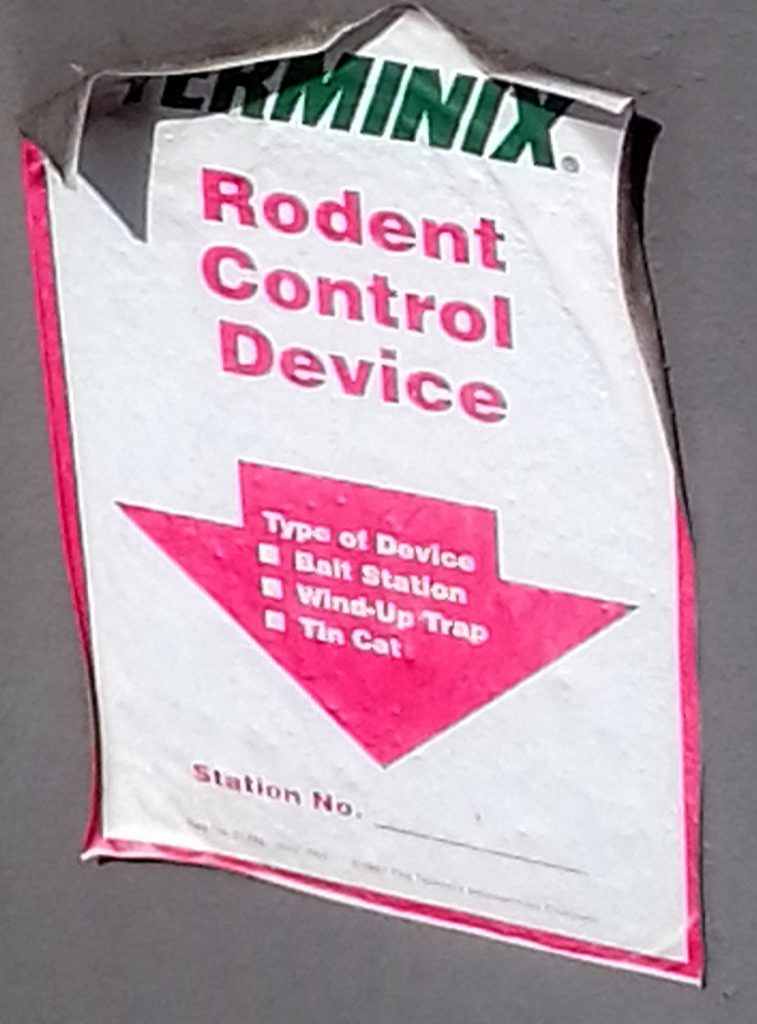
Poster stuck to wall. It says Rodent Control Device.

One of my father’s favourite bits of advice was “eschew obfuscation”, which, of course, was obfuscating in its own right.

I happened across this sign recently. Rodent Control Device, it said. Not Rat Trap. And yes, it does go on to list a number of devices that they might be using, but it did make me chuckle.

It got me to thinking of how many times documents cross my desk swollen with $20 words when a couple of 15-cent words would do just fine. The urge to show off your vocabulary is almost irresistible, that’s for sure. Just listen to our politicians speak.

But when we write, we write to be understood, not to impress others with the fabulousness of our expansive and sagacious verbosity. At least, I hope not! We write to communicate.

So keep it simple. Ask yourself, what’s the easiest way I can put this? How do I get my reader to understand what I want to say without reaching for a dictionary? Do I really need to construct elaborate sentences with multiple subordinate clauses? How long do those paragraphs have to be? Is there a new law against white space? And unless you’re being paid by the word—well, even if you’re being paid by the word—try to curb your enthusiasm. I know a blank page can be daunting, and anxiety propels us to fill it, but it’s better it be half-filled with something of value than full of sound and fury, signifying . . . well, you know.

One tool I find useful is the Flesch Reading Ease and Flesch-Kincaid Grade Level tool in Word. You’ll find it under File – Options – Proofing. It helps you check the readability of what you’ve written using a sophisticated algorithm and gives you the relevant scores.

The Flesch-Kincaid score corresponds to the reading age or US grade level a person would need to read your piece. The Flesch score tells you the percentage of people who you can expect to easily read it. You want to keep your piece at around Grade 8, or age 14 or so, and around 60% or more, or you’ll start losing us as readers. The tool also gives you helpful info like number of words per sentence, sentences per paragraph, and the percentage of passive sentences.

What it boils down to is this: Use shorter words in shorter sentences. Obfuscation represents a lack of self-control . . . or an over-abundance of vanity. Neither is a good thing. Learn to throttle yourself back—and call a rat trap a rat trap

For more about the Flesch and Flesch-Kincaid scales, check out these websites here and here.

Excited to hear your point of view. Please leave a comment below.

The Unconscious Sexism of Words

Sometimes what’s deeply buried in our minds pops to the surface like the skeletons on Poltergeist.

I was cleaning the litterbox the other day while our kitten sat nearby and supervised. It was, shall we say, a messy job. “Oh my God, Captain Poopypants!” I exclaimed as I filled my scoop. (No, her name isn’t Poopypants, and no, she wasn’t in the least bit ashamed of herself.) Immediately, a thought popped into my mind: But I can’t call her ‘Captain’; she’s a girl!

And then I punched myself in the face.

We all love to say we’re not sexist, but sometimes our unconscious biases spill out in our writing. This was a classic example; me for a second wondering how a female could be captain of anything. Duh.

Here are a few other ways in which our words betray our non-conscious sex and gender biases:

  • Calling women ‘girls’, especially if they work for you or perform lower-paying jobs like housekeeping or secretarial work. “I’ll have my girl call your girl”. Um . . . your ‘girl’ is 42 and has grown kids . . . .
  • Using a woman’s first name while referring to men by their last. “John Donovan, Miguel Santos, and Charlene were at the meeting.” Surely you mean ‘Ms. Thornhill’!
  • Referring to women as ‘females’. “What are all these females so upset about?” ‘Female’ is a biological term. Outside of medical or scientific situations regarding humans, the term is usually applied to animals. Who wants to be defined by their sex organs and chromosomes?
  • ‘Lady doctor’ and ‘male nurse’. We often make assumptions about the sex of a person in certain professions, so we feel we have to loudly announce when that person doesn’t belong to the gender we expect. How terribly 80s of us. How ‘bout we stop?
  • “Professor’s Wife Murdered”. I’ll never forget that newspaper headline; it actually caused quite an outcry from women’s groups. With all this woman must have achieved in her life, and the tragedy that she’d lost it, why was she reduced to the context of her relationship with a man? Why not “Science Teacher Murdered”? Why not “Runner-up in Art Competition Murdered”? She was more than a wife, no?

I’m not a huge advocate of completely unsexing the English language, and don’t care for newly created terms that disguise or eliminate gender altogether, but I do think we should keep our radar on when we write. The relationship between the genders is already fraught with tension. Why add to it?

Can you think of any more examples? Put them in the comments and let’s talk.